

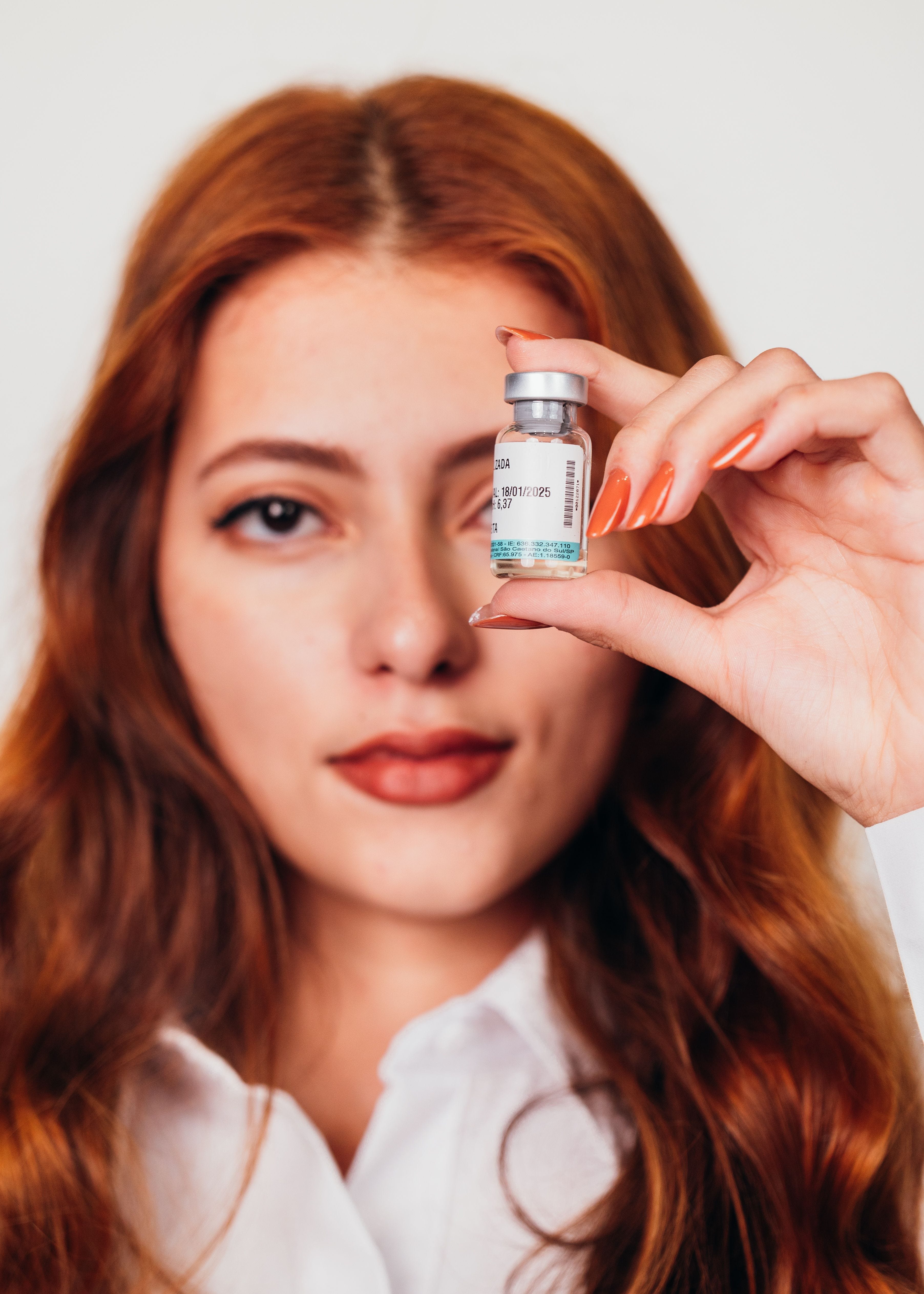
Let me start with a confession and a caution.
The confession: I’ve been on retatrutide, and the results have genuinely surprised me. More energy, steadier appetite, and a level of metabolic momentum I haven’t felt in years. Quite simply, it quiets the “food noise” and adds an incredible level of mental clarity and focus. It’s the kind of experience that makes you want to tell everyone you know.
The caution: that impulse, “this worked for me, so it’ll work for you”, is exactly how people get hurt in the peptide world. So this article is going to be different from most “best peptides” guides you’ll find online. I’m going to tell you what these compounds do, what the research actually shows, and just as importantly, what nobody selling them wants you to hear.
Because here’s the thing most peptide content leaves out: almost none of these are FDA-approved for the uses people want them for. Most are sold through research-chemical channels with no quality control. And the gap between “promising animal study” and “safe for you to inject” is enormous.
If you take one thing from this piece, let it be this: peptides are a “work with a knowledgeable doctor” category and you should always do your own research. That being said, let’s get into what’s actually interesting here.
First, What Peptides Actually Are
Peptides are short chains of amino acids, essentially small proteins, that act as signaling molecules in the body. They tell cells to do things: release hormones, repair tissue, reduce inflammation, regulate metabolism.
Your body makes thousands of them naturally. The peptides people inject or supplement are either synthetic copies of these natural signals or engineered molecules designed to trigger the same pathways more powerfully or for longer.
That’s the appeal. Instead of flooding your system with a hormone directly, many peptides nudge your own body to do more of what it already does. In theory, that’s a gentler, more targeted approach. In practice, the results range from genuinely impressive to completely unproven depending on the specific compound — and the safety data ranges from “reasonably studied” to “we’re basically running on rat data and optimism.”
Here’s the category-by-category breakdown.
For Fat Loss: The GLP-1 Class (Including Retatrutide)
This is the category with by far the strongest evidence, and the one I have personal experience with.
Retatrutide, semaglutide (Ozempic/Wegovy), and tirzepatide (Zepbound) are technically peptides, and they represent the most rigorously studied, most clinically validated peptides available for body composition. I’ve written a full piece on retatrutide specifically, so I’ll keep this focused: these compounds work by activating GLP-1 and related receptors that regulate appetite, insulin, and energy expenditure. The weight loss results in clinical trials are the best ever recorded outside of surgery.
The honest picture: Semaglutide and tirzepatide are FDA-approved and available by prescription. Retatrutide is not yet approved, it’s still in trials, which means the versions circulating outside those trials come from grey-market sources with all the risks that entails. The GLP-1 class also carries real side effects: significant nausea, potential muscle loss during rapid weight loss, and a long-term safety profile that’s still being written.
Bottom line: This is the one peptide category where the science genuinely matches the hype. But the approved versions require a prescription, and the unapproved ones (like reta) require accepting real uncertainty. Do this one with a doctor.
For Injury Recovery: BPC-157 and TB-500
If peptides have a “cult favorite,” it’s this pairing, nicknamed the “Wolverine stack” in fitness circles for its supposed rapid-healing properties.
BPC-157 is a synthetic peptide derived from a protective protein found in gastric juice. In animal research, it has shown the ability to speed healing in tendons, ligaments, muscles, and connective tissue, appearing to promote new blood vessel growth at injury sites. TB-500, a synthetic version of Thymosin Beta-4, appears to work more systemically, research has explored its potential roles in muscle and ligament repair, reduced scar tissue formation, and reduced inflammation.
The mechanisms are legitimately interesting. A 2025 systematic review in the Orthopaedic Journal of Sports Medicine looked at 544 articles spanning 30 years and found 36 studies that met their criteria — but here’s the critical detail: 35 of those were animal studies, and only one was in humans.
The honest picture: This is where you need to be clear-eyed. The evidence for BPC-157 consists almost entirely of studies on rodents. Human clinical trials remain scarce, a handful of small pilot studies, nothing resembling a large randomized controlled trial. Both compounds are not FDA-approved for human use, and both are banned by the World Anti-Doping Agency, so competitive athletes should steer well clear. Some physicians have raised theoretical cancer-risk concerns given how these peptides promote cell growth and blood vessel formation, the exact processes you don’t want accelerated if undiagnosed cancer cells are present.
Bottom line: The most intriguing recovery peptides, and the ones with the biggest gap between anecdotal enthusiasm and actual human evidence. Promising enough to watch closely; unproven enough that “my trainer recommended it” is not a good enough reason to inject it.
For Strength and Muscle: The Growth Hormone Secretagogues (CJC-1295 and Ipamorelin)
This pairing is the go-to for people chasing lean muscle, better body composition, and improved recovery through elevated growth hormone.
The two work synergistically through different mechanisms. CJC-1295 is a growth-hormone-releasing hormone analog that stimulates sustained GH secretion over an extended period. Ipamorelin acts on the pituitary more directly, inducing a faster, cleaner pulse of growth hormone without significantly raising cortisol or appetite the way some older compounds do. Used together, they’re often described as producing a stronger combined GH release than either alone.
The honest picture: Here’s the nuance most sellers skip. The body-composition benefits, more muscle, less fat, better recovery, are most clearly documented in people with an actual growth hormone deficiency. For people with normal GH levels, the evidence is much thinner; some studies show modest effects, but nothing definitive, and some reported benefits (like better sleep) may be partly placebo. On the regulatory side, in October 2023 the FDA designated CJC-1295 and ipamorelin as Category 2 bulk drug substances, effectively restricting their compounding. The FDA has also flagged immunogenicity risks — the potential for serious allergic reactions, and cardiovascular concerns with CJC-1295 specifically.
Bottom line: Real mechanisms, real prescribed use in GH-deficient patients, but oversold to everyone else. If your growth hormone is normal, temper your expectations significantly.
For Energy and Vitality: The Overlap Category
“Energy” is the fuzziest category, because it’s usually a downstream effect rather than a direct one.
The GLP-1 class can improve energy indirectly through better metabolic function and weight loss (this is a big part of what I’ve experienced on reta). The GH secretagogues can improve energy through better sleep quality and recovery. There’s no single “energy peptide” with strong evidence, anyone marketing one that way is usually repackaging a GH secretagogue or a metabolic peptide with an energy label slapped on.
The honest picture: Be especially skeptical here. “Energy” and “vitality” are the vaguest, least measurable claims in the peptide space, which makes them the easiest to exaggerate. Real, sustained energy improvements come from the fundamentals first, sleep, training, nutrition, and addressing any actual deficiencies with a doctor, not from a vial.
Bottom line: If a peptide is being sold primarily on “energy,” that’s a yellow flag. The legitimate energy benefits are side effects of peptides that do something more specific.
The Part That Actually Matters: How to Not Get Hurt
I want to spend real time here, because it’s the part the influencer content skips.
The quality problem is real. Most peptides are sold as “research chemicals not for human consumption”, a legal workaround, not a safety statement. These products aren’t manufactured under FDA oversight. Independent testing has repeatedly found problems in this market: incorrect concentrations, contamination, and in some cases compounds that aren’t what the label claims. When you buy grey-market peptides, you genuinely don’t know what’s in the vial.
The evidence problem is real. For most of these compounds, the exciting claims come from animal studies. Animal results are a starting point for research, not proof of safety or effectiveness in humans. “It worked in rats” and “it’s safe for you” are separated by years of trials that mostly haven’t happened yet.
The supervision problem is solvable. There’s a legitimate path here: physicians who specialize in peptide therapy, who can evaluate whether you’re an appropriate candidate, order the right labs, source from licensed compounding pharmacies where legal, and monitor you for side effects. It costs more than ordering online. It’s also the difference between managing a risk and gambling blindly.
One promising regulatory note worth watching: in February 2026, the U.S. Secretary of Health and Human Services announced that several peptides may be removed from the FDA’s Category 2 compounding restriction list, which could eventually open up more legitimate, supervised access. That’s a developing story, not a green light yet.
The Bottom Line
Peptides are one of the most genuinely interesting frontiers in health optimization, and one of the most oversold.
The honest hierarchy looks like this. The GLP-1 class (including retatrutide) has real, robust evidence, and I’m experiencing that firsthand. The recovery and GH peptides have interesting mechanisms and enthusiastic user communities, but thin human evidence and real regulatory and safety flags. And the “energy” category is mostly marketing.
My experience on reta has been genuinely positive, but the reason it’s been positive is that it’s the most-studied peptide of the bunch, and I’m treating the whole category with respect rather than recklessness. That’s the posture I’d encourage for anyone curious about this space.
Peptides are not a shortcut around doing the fundamentals well. At their best, they’re a tool, a powerful one, used carefully, under supervision, by people who’ve done the boring work first. At their worst, they’re an unregulated injection of an unknown substance based on a rodent study and a TikTok.
Be the first kind of person. Talk to a doctor who actually knows this space. And treat the excitement, including mine, as a reason to investigate carefully, not a reason to skip the investigation.
This article is for informational purposes only and is not medical advice. Peptides carry real risks, most are not FDA-approved for the uses discussed here, and several are banned in competitive sport. Always consult a qualified physician before considering any peptide therapy.
Ready To Start Your Peptide Journey?
If you’ve done the research and are ready to start your own physical transformation, Evolve, is a great marketplace option to consider. The prices are fair and the quality is high. I’ve worked with them for several months and they are responsive, discreet, and focused on customer satisfaction. After using their products consistently, it feels like I’m operating in cheat mode and achieving even better results than even I expected in such a short period.
Let’s Connect!
Follow me on X for more personal development insights and wealth building strategies! My best-selling book, No Limits is available on Amazon, as is my latest best seller, The Ultimate Prepper’s Survival Handbook.